Plate Heat Exchanger Mechanism
What is a Plate Heat Exchanger ?
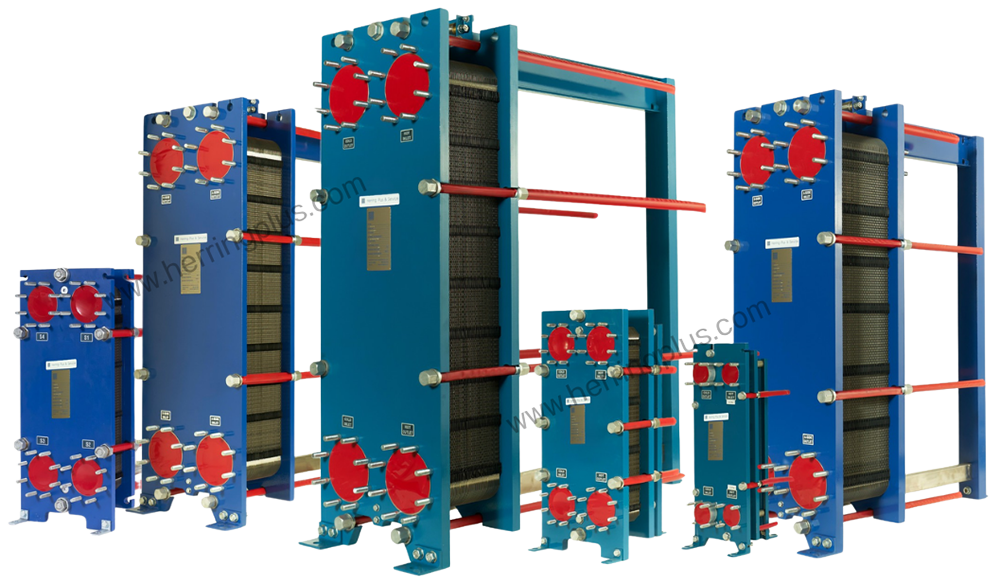
Plate Heat Exchanger (PHE), or a plate-type heat exchanger, is a device designed to transfer heat between two different fluids. It consists of multiple thin metal plates arranged in a series, which act as a separating barrier between the fluids. Heat is transferred through the plates without allowing the two fluids to come into direct contact or mix with one another.
The corrugated design of the plates increases the available surface area for heat transfer and promotes turbulent flow, resulting in highly efficient heat exchange ability. This design also enables the Plate Heat Exchanger to provide a large heat transfer area while maintaining a compact overall footprint.
Plate Heat Exchanger Structure
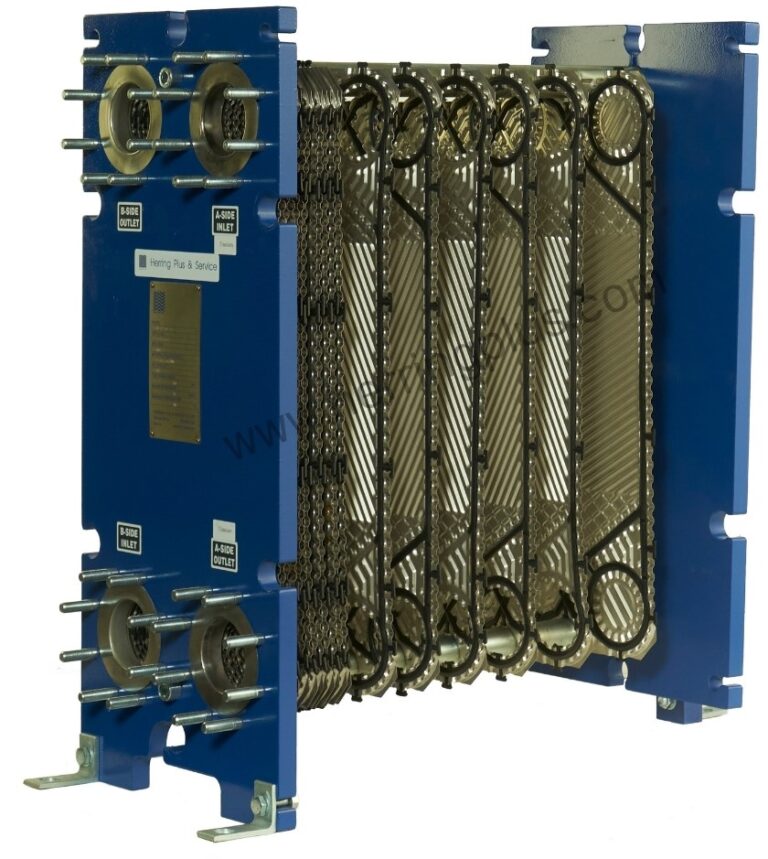
The unit consists of multiple thin metal plates arranged and stacked in sequence. These plates are typically designed with a V shaped or herringbone patterned surface to increase the heat transfer area and promote turbulent flow. This design enhances heat transfer efficiency and improves overall thermal performance.
Alternating Flow Channels
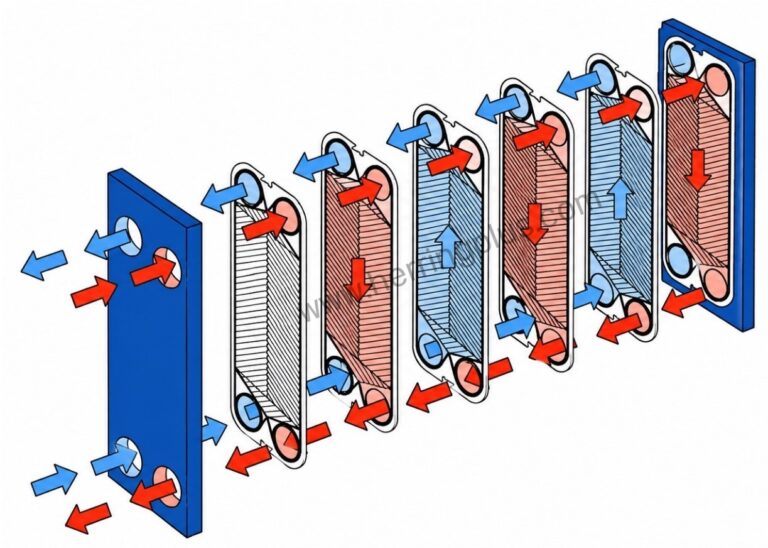
The plates are arranged with alternating flow channels between them, while gaskets are installed to seal the channels and prevent fluid leakage to the outside.
For example: Channels 1, 3, 5, etc. allow the hot fluid to flow through.
Channels 2, 4, 6, etc. allow the cold fluid to flow through.
The two fluids flow through separate channels formed by the stacked thin metal plates. They do not come into direct contact or mix with each other. As the hot fluid flows through one set of channels, heat is transferred through the metal plates to the cold fluid flowing through the adjacent channels.
As a result, the hot fluid loses heat, while the cold fluid gains heat as required for the intended process.
Key Features of Plate Heat Exchangers
- High Heat Transfer Efficiency
- Compact Design and Space Saving Installation
- Flexible Heat Transfer Capacity The number of plates can be increased or reduced to adjust the heat transfer capacity according to system requirements.
- Easy Maintenance and Cleaning. The plates can be easily removed for cleaning, inspection, and maintenance.
- Effective Fluid Temperature Control. Suitable for systems requiring precise and efficient temperature control of fluids.
- Versatile Industrial Applications. Suitable for a wide range of industrial applications and processes.
Key Components of a Plate Heat Exchanger
A Plate Heat Exchanger consists of several components that work together to ensure efficient heat transfer. Each component plays an important role in the heat exchanger’s overall performance, structural integrity, and ease of maintenance.
1.Plate (Heat Transfer Plate)
The plates are the primary components responsible for transferring heat between the fluids. They are typically manufactured from metal materials such as stainless steel, titanium, or other materials selected according to the type of fluids and operating conditions.
The plate surfaces are designed with corrugations or specific patterns to increase the heat transfer surface area and promote fluid turbulence. This design enhances heat transfer efficiency and ensures effective thermal exchange between the fluids.
2.Gasket (ปะเก็น)
The gasket is installed along the edges and around the flow ports of the plates. It serves as a sealing element to prevent fluid leakage and keeps the two fluids separated, preventing them from mixing with each other.
The gasket material must be selected according to the operating temperature, pressure, and type of fluid. Common gasket materials include EPDM, NBR, FKM, and other specialized materials suitable for specific industrial applications.
3.Fixed Cover (Front Frame)
Fixed Cover or Front Frame is the main front frame of a Plate Heat Exchanger. It supports and secures the plate pack and serves as the connection point for the fluid inlet and outlet ports.
In addition, the frame withstands the compressive force applied when tightening the plate pack, helping maintain structural integrity, ensure proper sealing, and minimize the risk of fluid leakage during operation.
4.Movable Cover (End Frame)
Movable Cover or End Frame is the movable rear frame of a Plate Heat Exchanger. It works together with the Fixed Cover to compress and secure the plate pack in place.
The movable frame can be slide open to provide convenient access to the plate pack, facilitating the removal, inspection, cleaning, and replacement of plates or gaskets during maintenance.
5.Upper Carrying Bar
Upper Carrying Bar is the upper support bar that supports and aligns the plate pack. It also serves as a guide rail for the movement of the Movable Cover or End Frame.
It facilitates the opening and closing of the heat exchanger, as well as maintenance activities, ensuring convenient and efficient operation of the Plate Heat Exchanger.
6.Carrying Bar
Carrying Bar is the lower support bar that helps support and maintain the alignment of the plate pack. It works together with the Upper Carrying Bar to enhance the stability of the plate pack and facilitate proper opening and closing during maintenance.
7.Clamp Bolt
The Tightening Bolts are used to compress and secure the Plate Pack to the specified tightening dimension. This ensures that the gaskets properly seal the flow channels and enables the heat exchanger to withstand the operating pressure.